2026 Florida Coastal HVAC & SEER2 AC Replacement Cost Guide: Tonnage Sizing, Salt-Air Coil Protection & Ductwork Pricing
A full residential AC or heat-pump changeout in coastal Florida ranges from $6,800 to $17,500+ in 2026 depending on SEER2 staging, Manual J humidity load, ductwork condition, and salt-air condenser protection. Calculate your exact tonnage and payback before requesting local bids.

Air conditioning in coastal Florida runs roughly 2,600 to 3,200 compressor hours a year—nearly triple the national residential average—while battling 75%+ outdoor dew points and corrosive marine salt mist blowing off the Gulf of Mexico, Tampa Bay, and the Atlantic Intracoastal. Buying a replacement condenser here using northern square-footage rules of thumb is one of the fastest ways to trigger clammy 65% indoor humidity and premature coil failure.
Between updated federal SEER2 external-static-pressure minimums, low-GWP A2L refrigerant transitions (R-454B and R-32), and hurricane tie-down permitting rules, understanding what separates a $7,800 builder-grade swap from a $16,500 coastal variable-speed heat pump saves thousands over a system's service life.
Ayrianna indexes 2,151 HVAC and mechanical contractors statewide—including 109 in Pinellas County, 218 across Hillsborough/East Bay, 149 in Manatee & Sarasota, 78 in Pasco & Hernando, 233 in Greater Orlando, 241 in Jacksonville, and 438 across South Florida. Florida HVAC changeouts require an active DBPR CAC or CMC license and a pulled municipal mechanical permit.
2026 Florida AC & Heat Pump Replacement Cost by SEER2 Tier
A permitted residential split-system AC or heat-pump changeout in Florida costs $6,800 to $11,800 for a 14.3–15.2 SEER2 single-stage system, $11,500 to $15,800 for a 16–17.2 SEER2 two-stage unit, and $14,500 to $22,500+ for an 18–22+ SEER2 variable-speed inverter system, before ductwork or coastal e-coat upgrades.
Under U.S. Department of Energy residential central air-conditioning standards for the Southeast region, new split-system air conditioners and air-source heat pumps are tested under the stricter M1 blower static-pressure procedure (SEER2). In Florida's nine-month cooling season, compressor staging controls indoor comfort just as much as raw electricity savings.

"Single-stage equipment—it's either on or off. Two-stage equipment operates at 70% capacity, 100% capacity, or off. Variable-capacity equipment will ramp from 30% capacity to 100% capacity... running longer, helping remove more humidity from the house."
— Yarbrough & Sons HVAC Breakdown, comparing installed cost tiers and latent moisture removal
| 2026 Florida System Tier | Capacity Modulation | Installed FL Price (3–4 Ton) | Indoor RH Control | Best Residential Fit |
|---|---|---|---|---|
| 14.3–15.2 SEER2 Single-Stage | 100% ON / 0% OFF | $6,800 – $11,800 | 54%–60% RH (wider 2°F swings) | Rental properties, tight budgets, well-matched legacy ductwork |
| 16.0–17.2 SEER2 Two-Stage | ~70% Low / 100% High | $11,500 – $15,800 | 49%–54% RH | Two-story block homes, snowbird residences needing steady dehumidification |
| 18.0–22+ SEER2 Variable-Speed Inverter | Continuous 30%–100% ramp | $14,500 – $22,500+ | 45%–50% RH (±0.5°F stability) | Waterfront homes, impact-glass retrofits, whisper-quiet patio/zero-lot-line pads |
| Full R-8 Attic Ductwork Replacement (Add-on) | Static-pressure matched | +$3,200 – $6,800 | Eliminates attic air infiltration | 20+ year fibrous ductboard or crushed flex ducts failing static-pressure tests |
Homeowners installing qualifying high-efficiency ENERGY STAR Cold-Climate / Tiered Air-Source Heat Pumps should also verify current federal eligibility rules under the IRS Section 25C Energy Efficient Home Improvement Credit (historically up to 30% / $2,000 for qualifying CEE top-tier heat pumps with an AHRI certificate matching condenser and air handler model numbers, alongside Florida utility rebates from Duke Energy Florida, TECO, and FPL).
Why "Bigger Tonnage" Causes High Humidity & Mold in Florida Homes
Oversizing a Florida air conditioner causes rapid short-cycling—chilling air temperature in eight minutes before the indoor evaporator coil gets cold enough for long enough to wring out latent moisture—pushing indoor relative humidity above the EPA's 60% mold threshold and choking undersized attic ductwork.
According to U.S. Environmental Protection Agency indoor moisture guidance, indoor relative humidity should stay strictly below 60% (ideally 45% to 52% in Florida) to prevent condensation and microbial growth on vents, closets, and drywall. Yet sales-driven estimators regularly offer Florida homeowners a "free half-ton or 1-ton upgrade" without running an ACCA Manual J heat-load calculation—especially dangerous if you recently added hurricane impact windows, blown-in attic insulation, or a light-colored metal/tile roof that cut your home's sensible heat gain by 20% to 30%.

"If you only have 3.5 tons of ductwork on your home and you install a 4-ton system, you're still only going to get 3.5 tons of airflow... and the extra pressure inside the cabinet is probably going to create humidity issues, which at some point will probably lead to microbial growth."
— Kenneth, Atlas AC, on Manual J load sizing vs. ductwork static-pressure limits
Simultaneously, ENERGY STAR duct-sealing studies show that 20% to 30% of conditioned air escapes through leaky return plenums and disconnected flex joints in typical residential attics. In a 130°F July Florida attic, every cubic foot of lost supply air pulls superheated, moisture-laden attic air into your living envelope through negative house pressure.
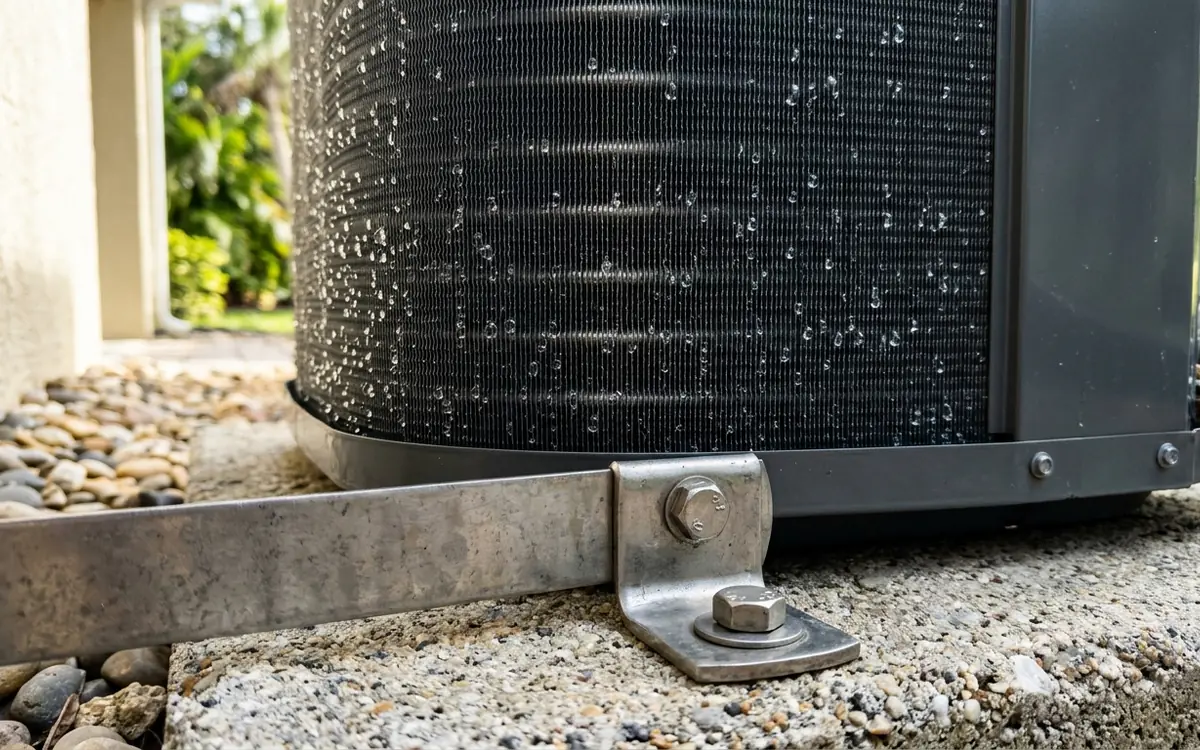
Salt-Air Condenser Protection: Barrier Islands vs. Mainland Corridors
Within half a mile of open Gulf, Bay, or Intracoastal saltwater, untreated aluminum condenser fins routinely corrode and crumble in four to seven years—cutting normal system life in half. Protecting coastal equipment requires factory phenolic/e-coat immersion, stainless cabinet fasteners, conformal-coated circuit boards, and semiannual fresh-water rinses.
In barrier-island communities from Clearwater Beach, Sand Key, and St. Pete Beach down through Anna Maria Island and Siesta Key, chloride ions settle onto warm outdoor coils nightly, triggering galvanic corrosion between copper refrigerant tubing and thin aluminum fins. As fins flake away into white powder, head pressure spikes, amp draw climbs 25% to 40%, and compressors overheat.

"You can do some coastal coating where you actually ship it to their plant, they coastal-coat it, and then they'll actually warranty against rust for 10 years—but you have to show proof of yearly maintenance... Without cleaning the system almost every six months, you're not going to beat the ocean."
— Surf Bros HVAC, coastal condenser longevity walkthrough
When requesting coastal bids within three miles of tidal water, specify one of two explicit corrosion tiers: Plant-Applied Immersion E-Coat / Phenolic Coating ($850–$1,450 add-on, baked onto every fin hairline before assembly with a 10-year coil-corrosion warranty when paired with documented maintenance) or factory Spine-Fin / All-Aluminum Coastal Packages with stainless-steel basepans, stainless cabinet screws, and potted inverter boards—plus low-pressure fresh-water coil rinses every six months.
Florida Coastal Tonnage, Salt-Air Coating & SEER2 Calculator
Model your approximate Manual J tonnage baseline (factoring in impact glass and insulation), recommended salt-air package, and 2026 installed Florida budget.
Notice how envelope upgrades reduce required tonnage: always verify exact sensible and latent BTU loads via a room-by-room ACCA Manual J calculation before ordering equipment.
Florida Mechanical Permits, Hurricane Tie-Downs & Low-GWP Refrigerants
Every central air-conditioner or heat-pump changeout in Florida legally requires a municipal mechanical permit, engineered hurricane pad tie-down brackets, locking refrigerant caps, and secondary condensate float switches—steps that unlicensed weekend installers skip at the direct expense of your 10-year manufacturer warranty and 4-Point insurance renewal.
When a homeowner hires an unpermitted side-job installer to save $900 on installation day, three expensive consequences routinely surface within 36 months:
- 4-Point Underwriting & Closing Delays: County property records and Pinellas County permit histories show an aging 2007 mechanical permit while the data plate on the outdoor condenser reads 2025—triggering unpermitted-work flags during insurance renewals or home-sale title inspections.
- OEM Warranty Downgrades & Refrigerant Transition Specs: Major HVAC manufacturers drop standard parts coverage from 10 years down to 5 years when equipment isn't timely registered to a licensed installation, and 2026 installations utilizing low-GWP
A2Lrefrigerants (R-454BandR-32) require factory-matched indoor leak-detection dissipation boards and clean nitrogen-brazed copper linesets. - Hurricane Strapping, Flood Elevation & Attic Float Switches: Under the 8th Edition Florida Building Code, outdoor condensers must be anchored to rated hurricane pads or elevated wall/stand brackets above Design Flood Elevation in coastal flood zones, while attic and closet air handlers require wired
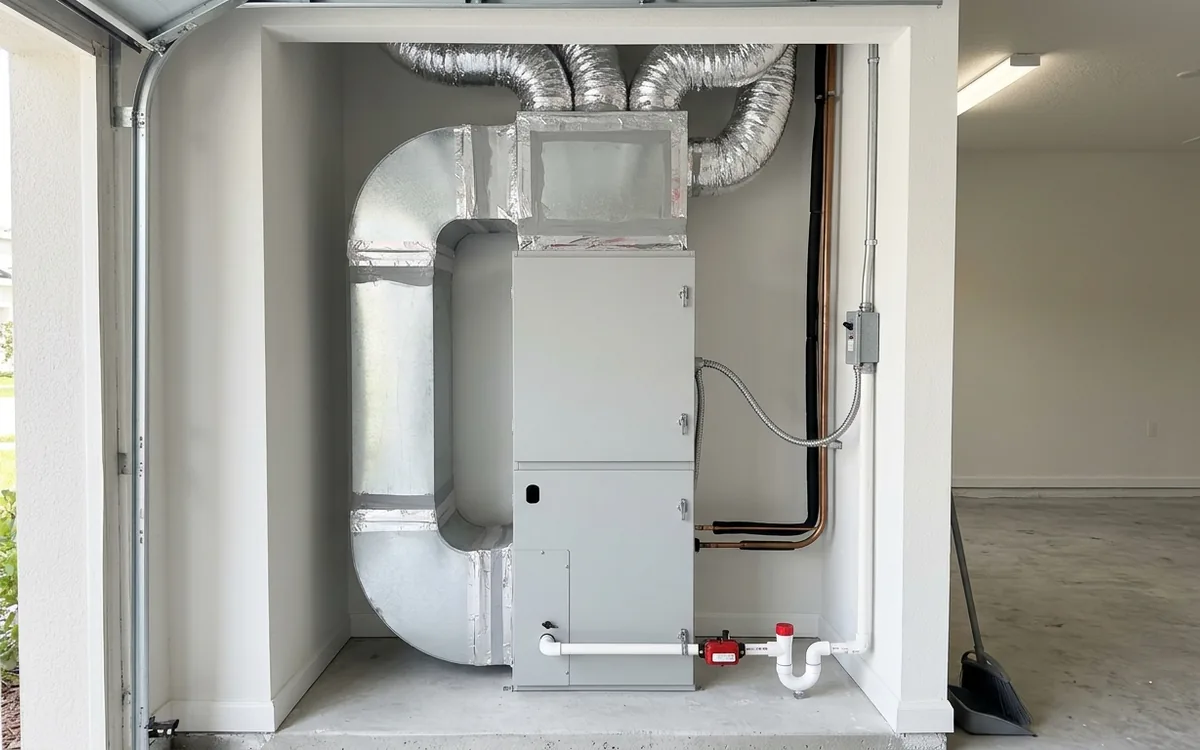
SS2overflow float switches so a clogged Florida algae drain line shuts down the compressor before collapsing living-room drywall.
Book a Licensed CAC Mechanical Pro Without Middleman Markups
Whether you need a Manual J replacement quote before July peak season or want neighbors on your cul-de-sac to split seasonal coil-rinse mobilization fees through Ayrianna Block Deals, search state-certified CAC and CMC mechanical contractors directly inside Pick Your Pro. Every profile ranks on audited credentials and True Score merit—with $0 lead fees added to your invoice.
Find a Verified Local Pro — $0 Middleman Tax
Every contractor is ranked by an unbiased True Score and vetted on real licensing and insurance — never auctioned to the highest bidder.
Are You a Local Pro? Claim Your Free Profile or Pinellas Charter Seat
Unlock uncapped direct homeowner leads for $0, free 14-Day Review Escrow protection, or lock out your trade on the 60,000-postcard EDDM Charter campaign.